Squad laboratory
Yet Another Zombie Survivors Builds and Synergies
This Yet Another Zombie Survivors builds hub connects team composition, upgrade focus and evidence-led synergy testing. It helps players diagnose what a run needs before copying a roster, and separates reliable role planning from version-sensitive meta claims.
- Game version
- 1.0.0b
Quick answer
Start with the missing squad job, not with a release-day meta list
This Yet Another Zombie Survivors builds hub exists to turn a vague squad idea into a real run plan. It focuses on what the current team lacks: coverage, control, finishing pressure, upgrade timing or route adaptation.
If you already know the game but need a structured way to build around version 1.0 systems, start here and then move into Best Team for composition or Synergies for mechanical proof.
At a glance
Key facts
- Build lens
- Coverage, control, finish pressure
- Common mistake
- Context-free meta copying
- Version-sensitive layer
- Rank 5 nodes
- Best current spokes
- Best Team + Synergies
These jobs explain most dependable squad recommendations.
A good build changes with route, timer and account progression.
Permanent progression can change how a visible trio actually performs.
These are the verified build-focused pages for launch.
Structured routes
Where to go next
Composition
Best Team method
Build a Yet Another Zombie Survivors team around role coverage instead of popularity or release-day rankings.
Open best team guideProof
Synergies explained
Verify conditions, effects and beneficiaries before calling an interaction core to a build.
Open synergies guideContext
Route-aware build selection
Check whether Bio Lab, Boss Rush or a progression objective changes what your squad needs.
Open maps hubDecision matrix
Diagnose the build problem before replacing everything
| Run problem | Likely missing job | Best next page |
|---|---|---|
| Waves stay healthy | Coverage | /builds/best-team |
| You lose movement space | Control or safer route discipline | /maps |
| Bosses live too long | Focused finish pressure | /builds/best-team |
What a build means in Yet Another Zombie Survivors
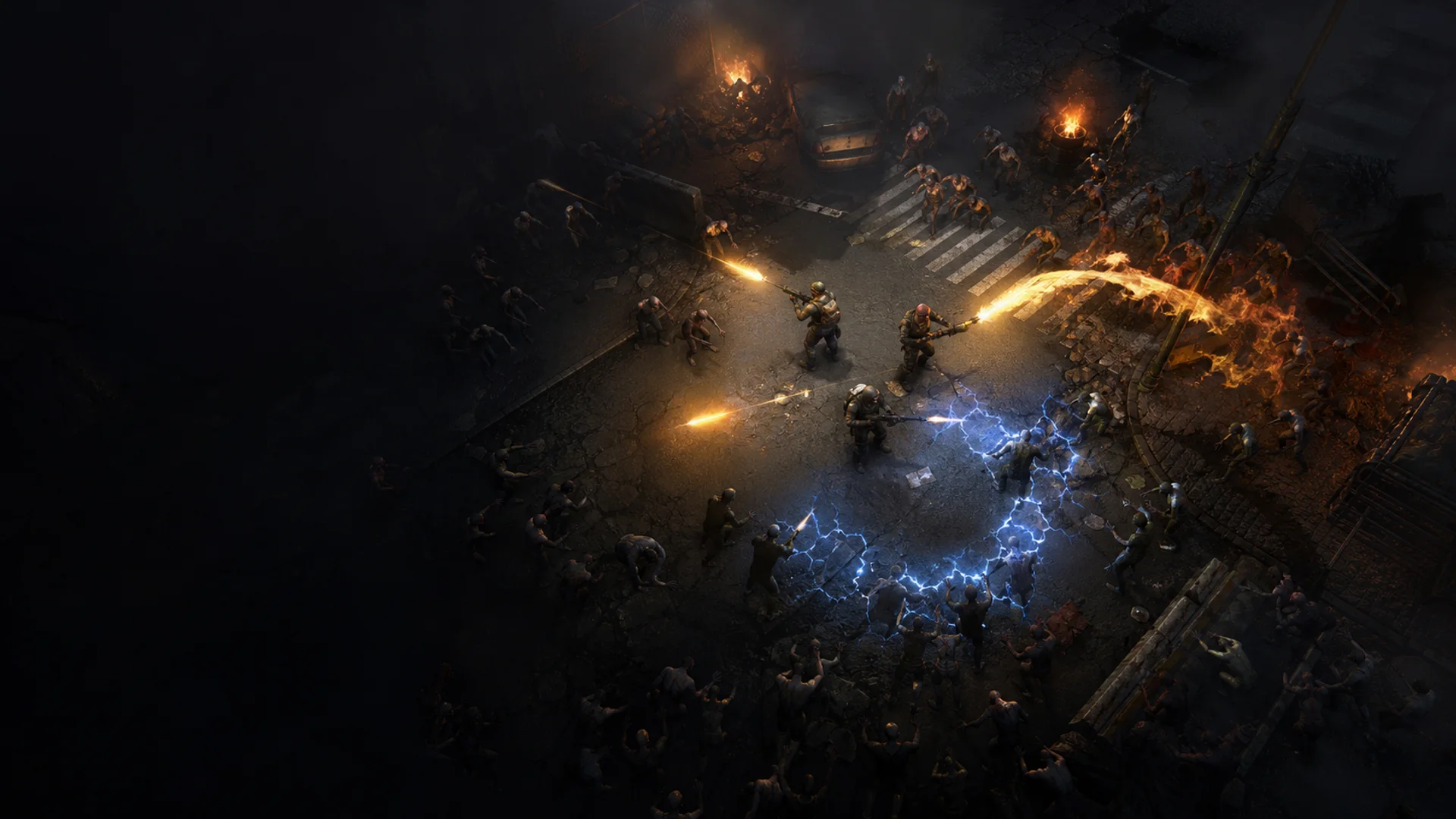
The official store describes assembling a squad, choosing upgrades and creating synergies as the core loop. A build is therefore the complete decision system used during a run: leader, recruits, weapon and ability priorities, permanent prerequisites, map, mode and fallback plan. A list of three character names is only a roster. A screenshot of late-game effects is only one outcome. Useful build guidance explains how the pieces become functional and what pressure the package is intended to solve.
Build claims also need version and context. Version 1.0 added Ranger, Rank 5 skill-tree nodes, Bio Lab and Boss Rush. Those changes can alter available interactions and the environment in which a team is judged. This hub avoids declaring one permanent meta. It links to a best-team method for distributing jobs and a synergy method for verifying conditions, effects and beneficiaries. Exact numbers belong beside a source and date; general decision principles remain useful across moderate balance changes.
Begin with a single win condition
Before selecting upgrades, write the plan in one sentence. It might maintain recurring area pressure while kiting, keep enemies inside controlled space or develop reliable critical pressure around a verified team effect. The sentence should identify how enemies are defeated and how the squad stays able to move. It is not a promise that every offered choice will cooperate. It is a filter that makes passing an attractive but disconnected upgrade easier.
The first investment should make one necessary function dependable. A build carrying several weak future concepts can fall behind before any synergy activates. Establish the leader's baseline engine, then add the enabler or recruit that solves the nearest weakness. Preserve flexibility when the route reveals a different problem. Focus means resources have a purpose; it does not mean ignoring evidence that ordinary enemies, movement space or boss pressure is already failing.
Distribute coverage, control and finishing pressure
Coverage damages routine enemies across the spaces they occupy. Control creates time or protects a lane. Finishing pressure remains effective against elites and bosses. These jobs provide a stable vocabulary for comparing teams without assuming rigid character classes. One survivor can cover two jobs, and a permanent node can change the contribution. A three-person squad should be evaluated as a system whose weakest required function determines when the route collapses.
Use losses as evidence. Healthy normal enemies accumulating indicates coverage or timing trouble. A screen that looks clear until the squad becomes trapped suggests control, collection or routing failed. A calm route that ends at a durable target reveals insufficient finishing pressure. Correct one job on the next attempt rather than replacing every character. Controlled iteration makes it possible to learn whether the roster, upgrade order or movement choice actually changed the result.
Separate role synergy from mechanical synergy
Role synergy exists when verified effects cooperate functionally: one character preserves space while another maintains damage, or one clears waves while another concentrates on bosses. Mechanical synergy requires an explicit condition and beneficiary, such as a stated modifier applying to a qualifying effect. Similar names, colors or character themes do not prove a mechanical link. Two attacks occurring together are not automatically more than their separate contributions.
The synergy dossier labels confirmed interactions, functional relationships and hypotheses. Break a claim into condition, effect and beneficiary, then inspect the live wording and account state. Version 1.0 Rank 5 nodes can add team passives that an undeveloped account lacks. A build guide must name that prerequisite. When the interface does not expose an exact calculation, report an observed functional result cautiously rather than inventing precision from overlapping damage numbers.
Draft recruits after observing the route
Recruitment is a chance to repair the current run, not merely complete a memorized trio. Before accepting a survivor, check enemy density, elite kill time, safe movement and experience collection. Choose the recruit whose baseline kit begins addressing the nearest risk and whose upgrades can realistically be supported. Waiting for a theoretical perfect composition while the current team falls behind is not optimization.
Reassess after every recruit. Two survivors may already clear waves but share dangerous downtime. The third can smooth it. They may create safe space but lack pressure for the mode's final target. The third can finish. They may depend on a permanent interaction that is not unlocked. The third should provide a useful baseline rather than another prerequisite. A build is drafted sequentially from live pressure, even when its desired end state was planned before the run.
Adapt builds to Bio Lab and Boss Rush
Boss Rush unlocks per map after Hardcore and places its final boss at minute ten according to the official release notes. It rewards early completion of a useful engine and preserves a deadline for focused damage. A normal survival build that becomes powerful only after a long sequence can be too slow. Yet a pure boss package can still fail if surrounding enemies consume the movement space needed to deliver its damage.
Bio Lab's expanding toxic border contracts usable space toward the center. Control and coverage should protect routes that remain viable rather than encourage endless retreat. Collection timing becomes part of build performance because experience left in dangerous space cannot fund the intended upgrades. These mode differences show why a tier label without a route is incomplete. The same roster can require a different upgrade order, and a lower-ceiling but earlier-functioning package can be the better choice.
Test a build without mistaking luck for proof
Hold the leader, route and broad early plan steady, then change one major variable. Observe time to establish wave control, safe-space consistency, durable-target pressure and whether the stated synergy condition visibly occurs. Repeat comparable attempts. One high-roll sequence proves only that many favorable upgrades can be strong together. A robust recommendation explains its prerequisites, fallback choices and what happens when the ideal component does not appear.
Record the game version and permanent progression. Do not compare an advanced Rank 5 account with a fresh account as if the roster alone caused the result. Avoid ranking solely by visual spectacle or a summary number that hides timing and positioning. A build can contribute collection safety or control without producing the largest burst. Conversely, impressive damage that arrives after the route has already lost movement is not a reliable solution.
Choose the right build dossier
Open Best Team when the question is which squad jobs and recruits belong together. Open Synergies when the question is whether two effects interact and who benefits. Open the survivor index when the leader is undecided. Open Bio Lab or Boss Rush when the route is known and the build must adapt to its rules. These distinct intents prevent several thin pages from competing for the same broad phrase.
The older best-builds URL is permanently merged into Best Team because its broad roster recipes overlapped the more useful team-planning intent. This Yet Another Zombie Survivors builds hub retains the overview and connects every verified spoke. New damage-type or mode-specific build routes will be published only when they have independent demand, current evidence and enough unique analysis. A smaller coherent laboratory is more useful than a copied catalogue of unsupported meta labels.
FAQ
Frequently asked questions
What counts as a good build in Yet Another Zombie Survivors?
A good build solves the route's real problems with a coherent leader, recruit roles and upgrade path. This Yet Another Zombie Survivors builds hub deliberately avoids flattening that into one static ranking.
Should I build around a survivor or around a route?
Usually both. Start with a leader whose opening you can execute, then let the route decide which recruit job and upgrade focus matter next. That is why this builds hub links directly into maps and progression pages.
Why do community build claims often feel inconsistent?
Because many were true only for one account state, one route or one patch. This Yet Another Zombie Survivors builds hub uses version 1.0.0b as its current baseline and keeps pushing readers to verify progression and route context.
Related field notes
Continue your research
Evidence record
Sources and version notes
- Yet Another Zombie Survivors on Steam
Used for official game identity, three-person squad premise, upgrades and synergy loop.
- Full Release — Version 1.0
Used for current roster, Ranger, Rank 5, Bio Lab, Boss Rush and release systems.