Roster index
Yet Another Zombie Survivors Characters and Squad Roles
The Yet Another Zombie Survivors roster contains nine playable survivors in version 1.0. This index helps choose a leader and two recruits by the jobs a run needs, while linking only to character dossiers that have passed the site's current-version evidence review.
- Game version
- 1.0.0b
Quick answer
Choose survivors by role and route pressure first
This Yet Another Zombie Survivors survivors hub is designed to answer the practical question behind roster browsing: which leader or recruit role solves the next run problem? Use it to compare coverage, control and finishing-pressure contributions before you commit resources.
When you need a full version 1.0 individual dossier, jump to Ranger first. When you need to turn the roster question into a team, move directly into the builds hub.
At a glance
Key facts
- Roster size
- 9 survivors
- Selection model
- Leader + recruits
- Permanent layer
- Rank 5 nodes
- Current verified spoke
- Ranger
Ranger joined the roster in the August 20, 2026 full release.
A run starts with one leader and can grow into a three-person squad.
Version 1.0 added new survivor passive and synergy nodes.
Ranger is the fully verified survivor dossier at launch.
Structured routes
Where to go next
Verified dossier
Ranger
Version 1.0 survivor with crossbow, companions and team-facing critical, luck and healing themes.
Open Ranger guideTeam planning
Best Team method
Turn survivor roles into a working three-person squad instead of guessing from popularity.
Open best team guideInteraction testing
Synergies explained
Check who benefits from a passive, under what condition and whether Rank 5 progression is required.
Open synergies guideDecision matrix
Use the survivors hub by question, not by name list
| Question | What to compare | Best next page |
|---|---|---|
| Which leader is easier to open with? | Starting pattern, early wave pressure and ease of positioning | /guides/beginner |
| Which recruit fixes the team? | Coverage, control or finishing-pressure gap | /builds/best-team |
| Does this passive really help the squad? | Condition, effect and beneficiary in the live version | /builds/synergies |
How survivors work in Yet Another Zombie Survivors
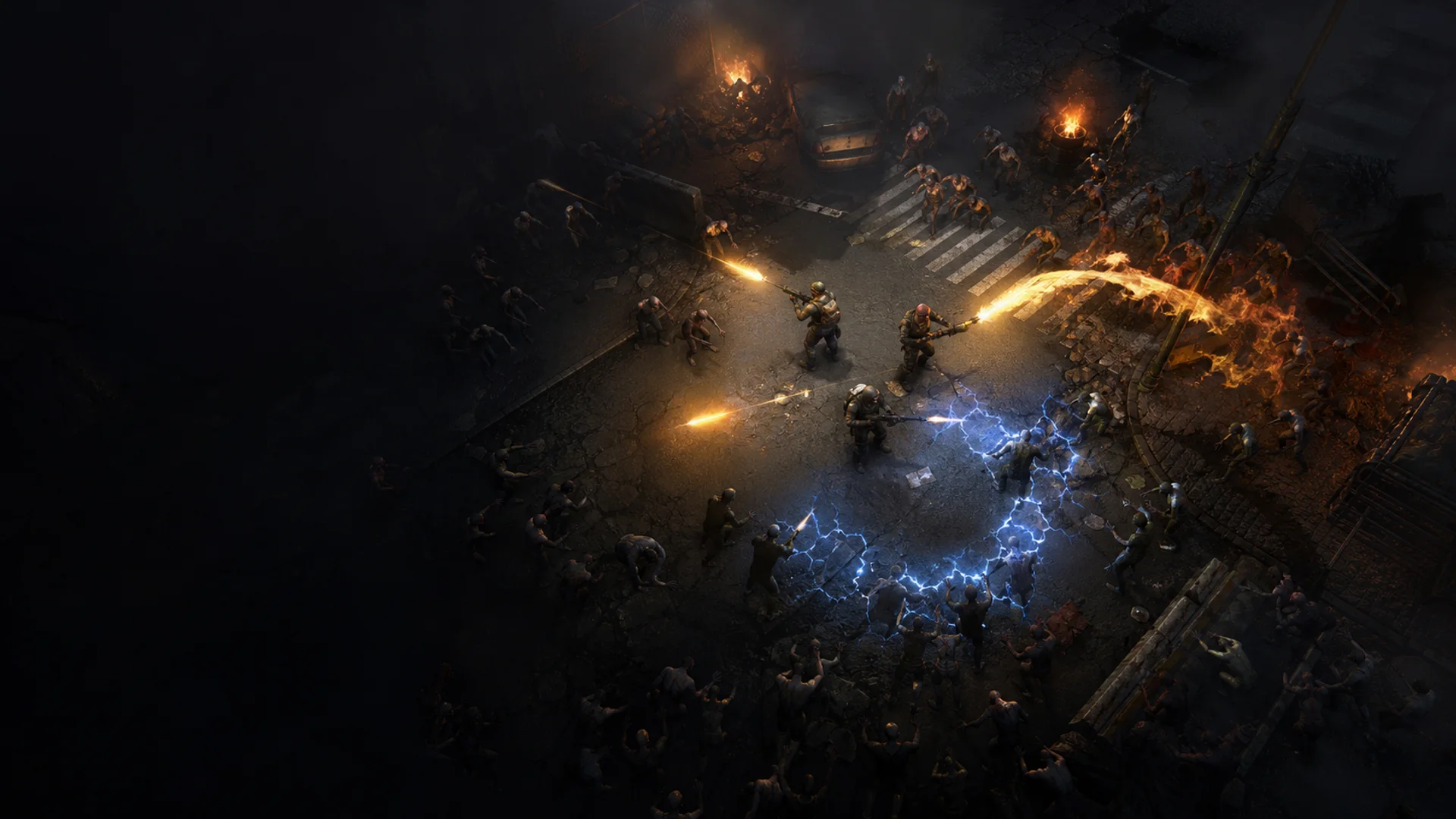
The official Steam description frames the game around assembling a squad, choosing upgrades and building synergies against large hordes. A run begins with a leader and can grow into a three-person team. That structure makes a survivor more than an isolated weapon. The leader choice establishes the early plan, while recruits can strengthen that plan or cover a weakness revealed by the map. Judge a character by what changes for the complete squad, not by a damage clip viewed without its mode, upgrades or permanent progression.
Version 1.0 lists nine survivors, with Ranger joining the established roster. Their visual identities and baseline themes differ, but this hub avoids publishing exact rank values or undocumented multipliers without a current source. Live character descriptions and skill trees are the primary authority for personal and team effects. The field manual explains decision methods and labels practical inference separately. A character dossier becomes indexable only after its individual facts, sources, version note, images and unique long-form analysis are ready.
Choose a leader by the run's first problem
The leader must carry the opening before recruits and advanced interactions are available. Choose a character whose starting pattern you can position reliably and whose contribution supports the intended route. A wide recurring attack may simplify ordinary wave pressure. A narrow or delayed pattern may need more deliberate movement and an earlier coverage recruit. A support-oriented theme can be valuable, but the team still needs a functioning way to defeat enemies and collect experience before its later benefits matter.
Write a one-sentence win condition before selecting upgrades. Examples include maintaining broad pressure while kiting, holding enemies inside controlled space, or developing a critical-oriented plan around a verified team effect. That sentence is a filter, not a rigid recipe. When the map exposes a different weakness, adapt. A good leader choice makes the first part of the run understandable; it does not guarantee that every offered recruit or upgrade will match a planned endgame composition.
Recruit for coverage, control or finishing pressure
Coverage keeps routine enemies from forming an unbroken wall. Control creates time or space through verified slows, interruptions, zones or other effects. Finishing pressure remains useful against elites and bosses that outlast ordinary wave clear. These are jobs rather than fixed classes. One survivor can contribute to several jobs, and the current upgrade path can change which contribution matters most. Before recruiting, identify which failure is closest instead of choosing the most familiar portrait.
If healthy normal enemies are accumulating, recruit or upgrade toward coverage. If damage is adequate but safe lanes disappear, value control and positioning support. If the route remains calm until a durable target stalls progress, preserve focused damage. The best-team guide develops this three-job model in detail. The survivor index uses it to prevent a common mistake: building three characters with similar strengths, then discovering that the squad has no answer to the one pressure none of them was chosen to solve.
Understand baseline kits versus permanent progression
A roster comparison must distinguish what every account receives from what a developed skill tree adds. Version 1.0 introduced Rank 5 and new synergy and passive nodes for survivors according to the official release announcement. A team effect demonstrated on an advanced account may therefore be absent or weaker for a new player. Any recommendation that depends on permanent progression should name the prerequisite rather than presenting the visible character combination as the whole build.
When opening a dossier, begin with the current live description. Identify the weapon or attack pattern, personal passive, team-facing effect and any condition that activates it. Then inspect the account's available nodes. Do not transfer a modifier from one beneficiary to the entire squad without explicit wording. The synergy guide breaks claims into condition, effect and beneficiary so permanent bonuses are not confused with baseline identity. This matters most after a major release, when older community tables may not include Rank 5.
Ranger and the version 1.0 roster
The official full-release notes identify Ranger as the ninth survivor and set her access at Survival Level 175. They describe a former park ranger using a crossbow and animal companions, with ways to support team Critical Chance and Luck and heal allies. Those facts establish her role themes but do not prove a universal tier position. The Ranger dossier checks how those themes can fit coverage, support and recovery while asking readers to verify the live beneficiary and condition for each chosen effect.
Ranger also changes roster planning by adding another team-oriented option to older compositions. A guide written before version 1.0 can still contain useful movement or role advice, but any claim that it covers every survivor is incomplete. The field manual dates roster pages so readers can recognize that boundary. Unlocking Ranger is an account milestone, while learning how she handles familiar maps is a separate step. Use early attempts to observe what her baseline kit covers before investing in a specialized squad.
Adapt survivor choices to maps and modes
Normal survival values stable recurring coverage over a longer timeline. Boss Rush requires a functioning build quickly and enough focused pressure for a final boss at minute ten. Bio Lab's expanding toxic border reduces the space available for retreat. These rules can change the relative value of the same survivor without changing a single character stat. A control contribution is particularly useful when it protects space the player can actually use; focused damage matters only if ordinary enemies remain managed.
Choose the route before calling a roster optimal. If a player is learning, familiar movement and a forgiving opening may be worth more than a theoretical high ceiling. If a leaderboard is the objective, timing and permanent progression need separate evaluation. If a mission specifies a survivor, let the remaining recruits preserve the run instead of forcing all three choices into the mission theme. Context turns a roster list into a decision tool and prevents mode-specific advice from becoming a false universal ranking.
How to test a new survivor responsibly
Use a familiar map and hold major variables steady. Run the survivor as leader to understand the opening pattern, then compare a recruit role if that reflects the intended team. Track what first threatens the squad, which attacks maintain useful uptime, and whether a claimed team effect visibly applies to the expected beneficiary. One lucky upgrade sequence is not enough evidence. Repeat the observation and record the current game version before turning it into a recommendation.
Avoid judging only by total visual damage. Area, timing, control, collection safety and boss pressure can matter even when a summary number looks lower. Conversely, a spectacular effect may arrive too late or require resources the current route cannot reliably provide. Change one major variable between attempts so the result teaches something. If the interface does not expose an exact calculation, report a functional observation cautiously rather than inventing precision from overlapping numbers and effects.
Roster index editorial status
Ranger currently has a complete, source-backed version 1.0 dossier. Other survivor URLs remain available for navigation continuity but stay noindex until their individual research and unique 1,200-word analyses are complete. They do not appear in the sitemap or homepage verified notes. This is deliberate: nine thin pages that substitute names into one template would not answer character-specific questions and would violate the field manual's source promise.
Use this Yet Another Zombie Survivors characters hub to understand leader and recruit decisions, then open the verified Ranger page or the best-team and synergy guides. Future survivor dossiers will state the live version, sources, baseline kit, permanent prerequisites, map fit, testing method and correction history. Until that evidence exists, the roster index makes no claim that an archive entry is a full guide. Quality and distinct search intent determine publication, not the desire to display a larger indexed page count.
FAQ
Frequently asked questions
How many playable survivors are in Yet Another Zombie Survivors version 1.0?
The official August 20, 2026 full-release notes identify nine playable survivors in version 1.0, with Ranger added as the ninth survivor.
Should I pick a survivor by tier list or by team role?
Use role first. This Yet Another Zombie Survivors survivors hub is built to compare what a survivor changes for the squad and route, not to preserve a context-free ranking.
Why are most survivor pages still archive-like?
Because this Yet Another Zombie Survivors survivors hub only treats individual survivor pages as publishable once they have current-version facts, unique analysis, sources, images and at least 1200 useful words.
Related field notes
Continue your research
Evidence record
Sources and version notes
- Yet Another Zombie Survivors on Steam
Used for official game identity, three-person squad premise, upgrades and synergy loop.
- Full Release — Version 1.0
Used for current roster, Ranger, Rank 5, Bio Lab, Boss Rush and release systems.